
Leveraging key technologies to achieve sustainability
We have always considered challenges within the larger context. Today, this means acknowledging that no one single solution or technology can get us towards our goal of net zero emissions. This is why we have selected and developed five key technologies which make up the center pillars of our decarbonization strategy, complementing our existing and always evolving core portfolio.
These technologies are able to reduce emissions in hard-to-abate sectors such as shipping, power and heat generation, industrial processes such as cement and chemicals, which are energy-intensive and hard to electrify. Green engines, solutions for carbon capture, utilization and storage (CCUS), as well as innovative industrial-scale heat pumps, cost-effective electrolyzers for green hydrogen production and retrofitting solutions – all of these technologies give us the leverage to decarbonize industries as quickly as possible.
Our five core technologies have immense leverage to reduce so called hard to abate CO2 emissions. This means we have the lever to address 30% of global emissions.
Key transitional technologies
The following figures are examples of the benefits of MAN Energy Solutions’ solutions
5 key future technologies
We offer a portfolio of pioneering future technologies that help fight climate change while presenting significant market potential and business success. With our know-how, expertise and leading edge in each of these technologies, we are well-equipped to provide sustainable solutions to the current climate challenges.
We retrofit ships and plants to reduce fuel consumption and emissions.
Our green engines powered by future fuels such as green hydrogen, ammonia, methanol, and biofuels, are essential for long-term decarbonization.
We are also working with partners on CCUS (carbon capture, utilization, and storage) to capture and store unavoidable carbon dioxide emissions.
Lastly, our heat pumps are an energy-efficient solution for heating and cooling buildings by reducing energy demands.
Related news
Car Carriers Stir Methanol Engine Demand
China Merchants Heavy Industry has ordered 2 × MAN B&W 7S60ME-LGIM (-Liquid Gas Injection Methanol) engines in connection with the construction of 2 × 9,300 ceu (car equivalent units) PCTCs for China Merchants Energy Shipping (CMES). The business represents a number of firsts, including the first order globally for the S60ME-LGIM variant, the first methanol-fuelled engine for a PCTC, and the first Chinese-built methanol engine.
The engines will feature MAN Energy Solutions’ proprietary EGR (Exhaust Gas Recirculation) system. Engine manufacturer, CSE, will construct the engines in China with respective vessel delivery set for 2025 and 2026; the order also contains an option for an additional four vessels.
Bjarne Foldager, Head of Two-Stroke Business, MAN Energy Solutions, said: “Interest in using methanol in ocean-going vessels is at an all-time high, especially in the container vessel segment but also in the vehicle-transport sector whose main players are moving to expand capacity driven by very strong, Chinese car sales, and to renew their fleets in response to new emission regulations. Thus, with this order, CMES is simultaneously expanding its business and improving its sustainable profitability. While LNG has been the most popular alternative fuel within the PCTC segment, CMES is one of the first movers to methanol, which we expect will figure prominently as a future fuel in the maritime energy transition across all vessel segments.”
Thomas S. Hansen, Head of Promotion and Customer Support, MAN Energy Solutions, said: “The 110 ME-LGIM engines ordered and more than 400,000 running hours on methanol already recorded at sea show the potency of our methanol concept. Indeed, in response to the increasing interest in methanol-powered engines, we recently expanded our portfolio with the addition of S60-, G60- and G45-LGIM variants such that the propulsion power of our methanol portfolio now spans across all large merchant-marine vessel applications such as container vessels, bulk carriers, tankers, and general cargo vessels like PCTCs.”
Documents
-
PR China Methanol Milestone_EN
Contact
Nils Søholt
Trade Press Marine
Group Communications & MarktingEverllenceTeglholmsgade 412450 Copenhagen SVDenmark
nils.soeholt@everllence.com t +45 33 85 26 69Available languages
- DE ·
- EN
Get notified about press releases
Related articles
-
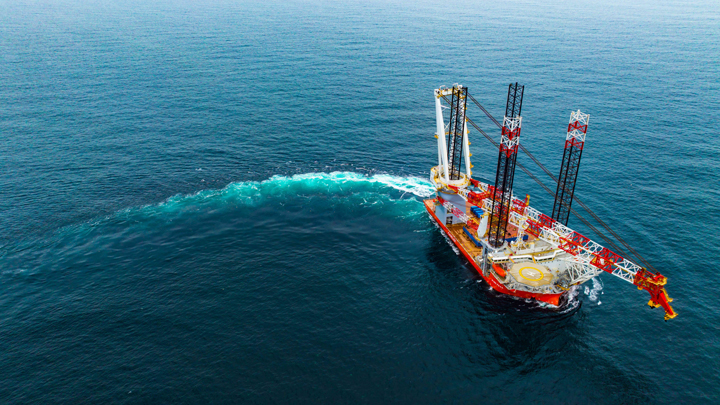
The latest-generation wind turbine installation vessel
A new wind turbine installation vessel with a customized-engine configuration lets offshore wind contractor Cadeler transport and lift more powerful turbines in even rougher locations – and they’re saving emissions while they are at it.
-
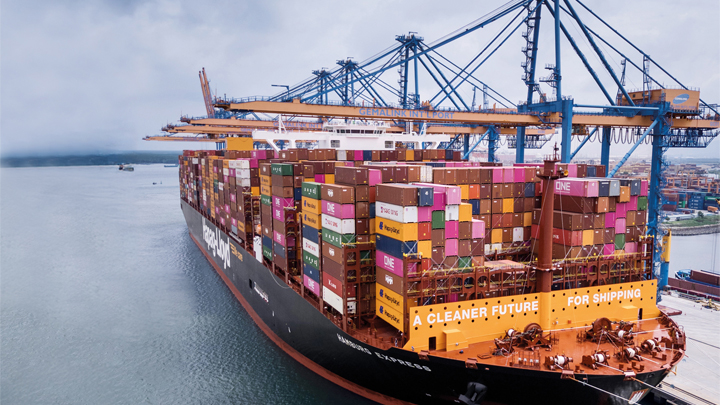
Hapag Lloyd LNG container vessel
Hapag-Lloyd’s new LNG-powered containership cuts emissions by a quarter immediately and by 95 percent with green methane
-
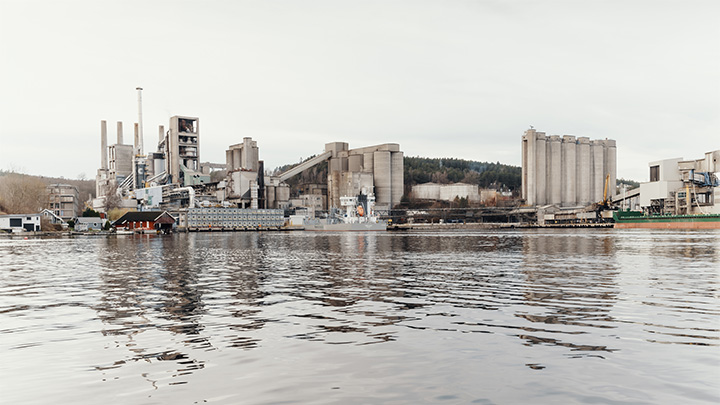
Heidelberg Materials: First CCS plant for cement industry
The first CCS facility for cement production in Brevik, Norway, is paving the way for carbon-neutral industrial processes.
MAN Energy Solutions is now Everllence.
We have adopted a new brand name and moved to a new domain: www.everllence.com. This page will also be relocated there shortly. We are working on shifting all pages to www.everllence.com.